
GLP-1 Starter Kit: What You Need and What Can Wait
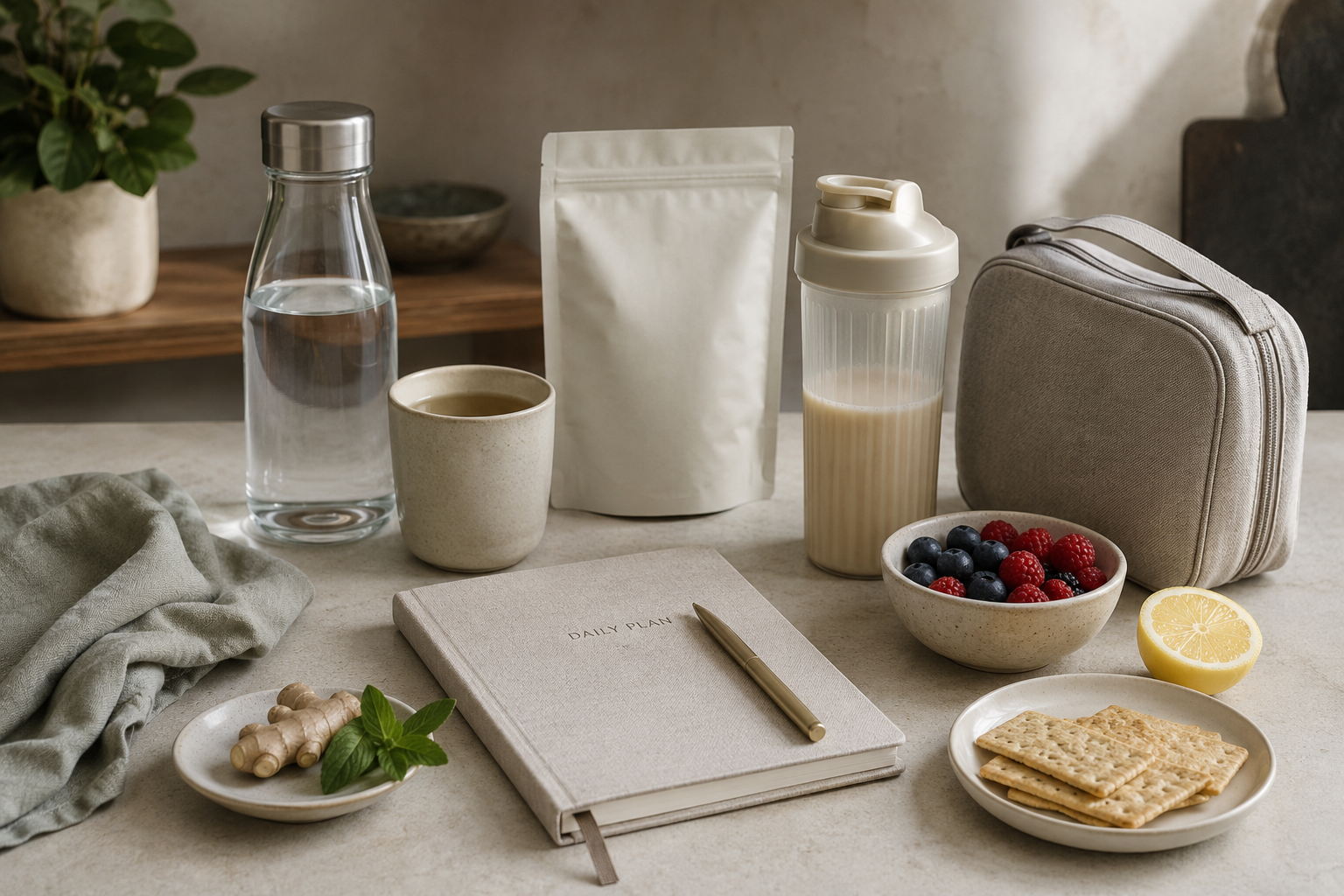
Starting treatment can make a well-stocked shopping basket feel like preparation. A bottle, a blender, three tubs of powder and perhaps a very small lunchbox. It is reassuring to have something concrete to do.
But a useful kit begins with the prescription and the day you actually have. You may already own most of what you need. Some things depend on your device, your health or whether you are away from home; others can wait until you know you would use them.
What are the seven things to check first?
| Item or arrangement | Why it matters | Before you buy |
|---|---|---|
| 1. Correct instructions and supplies | You need to use the exact product and device safely. | Ask the dispensing pharmacy what is included and whether anything else is required. |
| 2. Sharps disposal, if injecting | Used needles and relevant devices need safe containment. | Check whether a suitable container is supplied and how it will be collected or disposed of. |
| 3. Suitable medicine storage | Temperature and in-use limits differ by product. | Read your leaflet before choosing a case or cooling accessory. |
| 4. Accessible food and containers | Prepared food is useful only if you can reach and store it safely. | Use existing containers where suitable; buy for the meals you actually eat. |
| 5. A glass or bottle you use | Keeping a drink available can make drinking more convenient. | A normal cup may solve the problem without a specialist bottle. |
| 6. A simple place for notes | Symptoms and questions are easier to discuss when you remember the details. | A phone note or paper notebook may be enough. |
| 7. Contact and refill arrangements | You need access to advice and a clear supply plan. | Save the contact details and check lead times, charges and what happens if supply is delayed. |
If you use a tablet rather than an injection, sharps equipment may not apply. If you use insulin or another medicine requiring monitoring supplies, your own care plan may add essentials that a general list cannot cover.
What do UK and US readers need for safe sharps disposal?
UK: use an appropriate sharps bin for used needles and other applicable sharps, and ask your supplying service about local arrangements. Kent Community Health NHS guidance explains the purpose and safe handling of these containers. Its local collection details should not be assumed to apply everywhere. NHS sharps guidance.
The GOV.UK council collection finder covers England and Wales; arrangements and possible charges vary. In Scotland or Northern Ireland, ask your pharmacy, treating service or local council for the correct route. Do not assume every pharmacy accepts a full bin.
US: FDA guidance recommends placing used sharps immediately in an appropriate disposal container and following local disposal rules. Do not put loose sharps in ordinary rubbish or recycling. Keep containers away from children and pets. FDA sharps guidance.
Check before buying replacement needles or syringes. Devices differ, and the correct supplies should come from the product instructions and dispensing team. Do not share a pen or improvise a way to extract extra medicine.
Do you need a travel cooler or a special medication fridge?
Not automatically. The relevant questions are where the medicine will be kept, for how long, and within which temperature limits. Those limits depend on the exact product, device and whether it has been opened or used.
Current UK Mounjaro KwikPen information and US Zepbound information are examples of product-specific instructions, not a universal storage rule. Follow the leaflet supplied with your own medicine. A case advertised for “GLP-1 pens” does not establish that it maintains the required temperature for your journey.
If cooling is needed, ask how to avoid freezing or direct contact with a frozen pack. If the medicine has been outside its permitted conditions, ask the pharmacy whether it is usable. Do not judge safety from appearance alone or change the dose to compensate.
Before paying for a travel accessory, use our medicine-travel guide to prepare the questions. A short local journey and a long flight in summer may require different arrangements.
Which kitchen items are worth having?
Choose equipment around the food you already manage. A lidded container, spoon, microwave-safe bowl or insulated lunch bag may be useful. A portable blender is only useful if you want blended food, can clean it properly and can store the ingredients safely.
Try the food before buying the appliance. If you do not enjoy smoothies, a blender will not make them an obligation you suddenly want. A ready-to-eat meal or food assembled with ordinary utensils may be more practical.
Container size should help with storage, not set a new limit on how much you may eat. You can serve an amount you can manage and have more later if needed. Using a tiny box does not prove that the day's intake is adequate.
Our low-appetite food guide can help you choose a few options before shopping. Keep the kit small enough that you can find what you need without unpacking a cupboard.
Is protein powder an essential GLP-1 purchase?
No. It may be a convenient way to add protein if it suits your diet and helps meet an agreed need. It is not a guarantee against muscle loss, and a protein powder is not automatically a nutritionally complete meal replacement. The joint professional nutrition advisory supports individual nutritional assessment rather than a universal shopping prescription.
Look at the protein in the serving you will actually use, ingredients, allergens and the preparation instructions. A scoop's weight is not the same as its protein content. Powder mixed with water is also nutritionally different from powder mixed with milk or other ingredients.
If you struggle to eat enough, ask whether a supplement, a different food approach or another assessment is appropriate. A larger tub is not the first answer to persistent nausea or very low intake.
How do you compare cost per serving without being misled?
Use the amount you will actually prepare. For illustration, imagine three products with the prices and protein amounts below. These are hypothetical products, not shop listings. The calculation works separately in pounds or dollars; no currency conversion is implied.
| Example | Price and servings | Cost per serving | Assumed protein per serving |
|---|---|---|---|
| A | £20 for 20 servings | £1.00 | 20 g |
| B | £24 for 20 servings | £1.20 | 24 g |
| C | $30 for 20 servings | $1.50 | 20 g |
Example A costs £1 ÷ 20 × 10 = £0.50 per 10 g protein. Example B costs £1.20 ÷ 24 × 10 = £0.50 per 10 g too. B costs more per serving but the same for that protein amount. Example C costs $1.50 ÷ 20 × 10 = $0.75 per 10 g.
This is only a price comparison. Taste, allergens, tolerance, overall nutrition and whether you will use the product still matter. Delivery charges, unused portions and any ingredients you add can change the real cost. Our protein-label guide covers the nutrition calculation in more detail.
What about electrolytes, ginger and a “side-effect kit”?
Do not stock supplements on the assumption that you will need them. Electrolyte powder is not an automatic requirement for GLP-1 treatment. For fluid loss through vomiting or diarrhoea, a pharmacist can advise about an appropriate oral rehydration solution. Wellness powders are not necessarily equivalent. NHS rehydration guidance.
If you enjoy ginger tea as a drink, that is different from a proven GLP-1 nausea treatment. Persistent or troublesome nausea needs advice. Ask before adding supplements or over-the-counter medicines, particularly if you have other conditions or take other prescriptions.
A useful side-effect kit can simply be the contact number, your medicine details and a way to record what is happening. It should help you seek care, not encourage you to keep managing escalating symptoms with another purchase.
Do you need food scales or a body-composition scale?
Only if they answer a useful question for you. Kitchen scales can help with a recipe or a label calculation, but weighing every meal is not a requirement for everyone taking GLP-1 treatment. Ask your clinician or dietitian what level of detail would help.
If tracking becomes distressing or drives restriction, discuss that rather than buying a more detailed tracker. A consumer body-composition display does not diagnose muscle loss. Our muscle evidence guide explains what different measurements can and cannot show.
How should you budget for the kit alongside treatment?
Separate one-off purchases from repeat spending. A bottle you already own costs nothing extra; powder bought every month is an ongoing expense. Clinical supplies and appointments may also be charged separately, so check what your service includes.
For a worked budget, write three lines: treatment and appointments, required supplies, and optional extras. Then ask which optional item would solve a problem you already have. You can leave the rest for later.
The Reset Edit's UK cost planner and US cost planner can help explore medicine spending using the price and supply pattern you enter. They do not determine the right treatment, guarantee future prices or replace a coverage check. Add accessories and other charges separately if they are outside the figure you enter.
What else do readers ask?
Should I buy a complete branded starter bundle?
Check every item against your actual needs and the total price against buying only what you need. A bundle's name does not establish that its contents have been tested together in GLP-1 users.
Is a more expensive water bottle better for treatment?
No treatment benefit follows from the price. Choose a container you can clean, carry and use comfortably, while following any individual fluid guidance.
What should I have ready before the first dose?
The correct medicine and instructions, any required device supplies, suitable storage and disposal arrangements, and a way to contact your prescribing or dispensing team. Ask them to resolve anything unclear before use.
© The Reset Edit™ 2026 — Modern Tools + Lifestyle Essentials for Sustainable, Reset Living. All rights reserved.
Information provided is for general lifestyle guidance only and is not medical, financial, or professional advice.
This article is for general informational purposes only and is not intended to replace medical advice. Always consult a qualified healthcare professional before making changes to your medication, diet, supplements, or exercise routine — especially when using GLP-1 medications such as Ozempic, Wegovy, Zepbound or Mounjaro. The Reset Edit™ provides lifestyle guidance and educational resources only.