
Travelling with GLP-1 Pens: Refrigeration, Airport Security and Time-Zone Tips
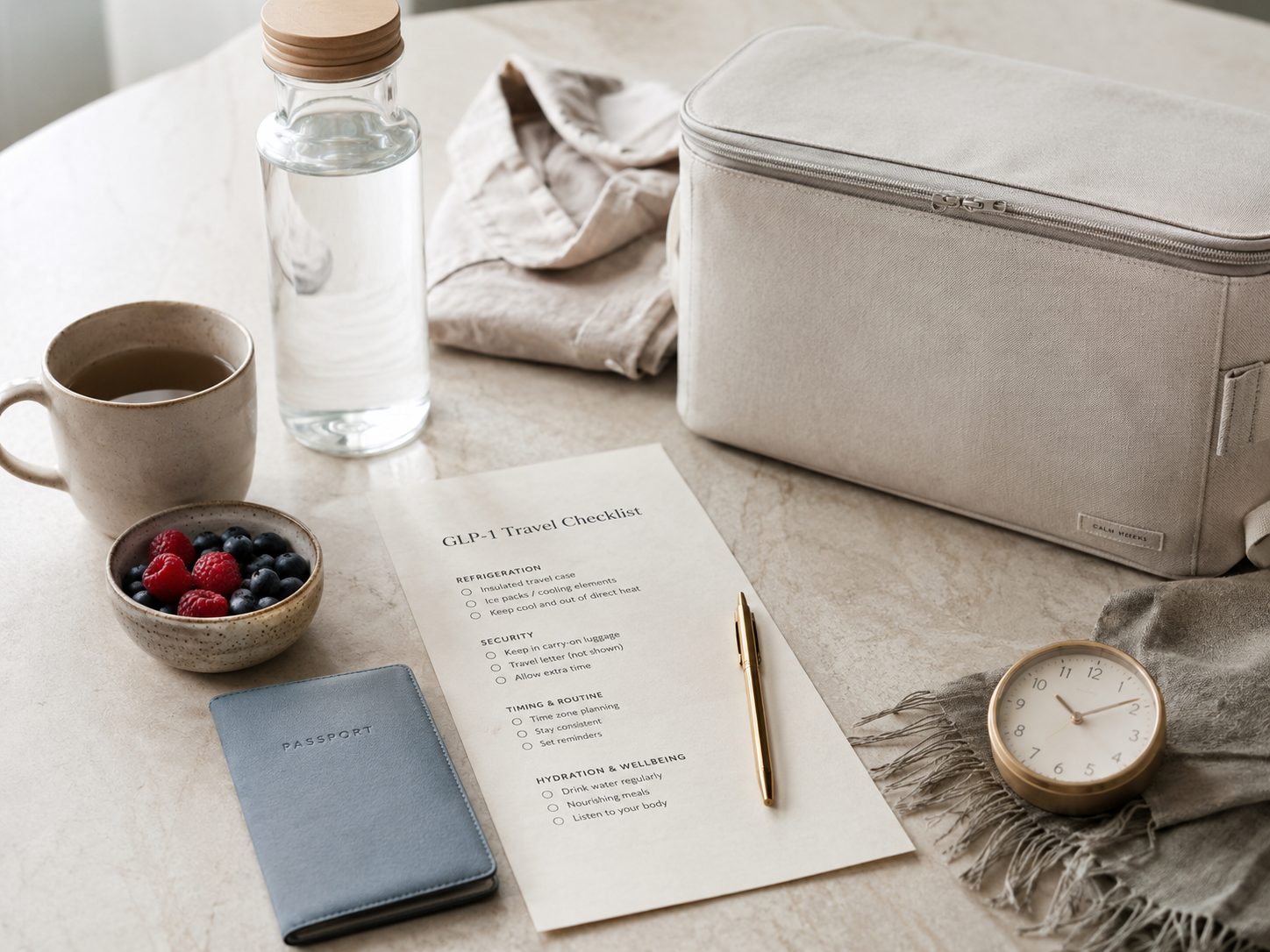
Travelling while using GLP-1 medications such as semaglutide (Ozempic, Wegovy) or tirzepatide (Mounjaro, Zepbound) can raise practical questions.
People often wonder:
• how to store their injection pens during flights
• whether airport security will allow the medication through
• how to handle different time zones
• what to do if a dose is delayed during travel
These medications require thoughtful handling because they are temperature-sensitive and often administered on a weekly schedule.
With a little preparation, however, travelling with GLP-1 pens can be straightforward and stress-free.
If you're trying to make this feel manageable in real life, the GLP Reset™ System brings everything together in one place — simple, structured, and designed to actually work day to day.
Understanding How GLP-1 Pens Are Stored
GLP-1 medications are usually supplied in pre-filled injection pens.
Before first use, many GLP-1 pens are stored in the refrigerator.
After opening, the medication may often remain stable at room temperature for a limited period depending on the specific drug and manufacturer guidance.
Because storage instructions vary slightly between medications, it is always important to check the instructions provided with your prescription.
When travelling, the main goals are:
• preventing extreme heat
• preventing freezing
• protecting the medication from direct sunlight
Maintaining stable temperatures helps ensure the medication remains effective.
Can You Take GLP-1 Medications Through Airport Security?
Yes. Prescription medications are generally allowed through airport security.
Passengers travelling with GLP-1 injection pens can usually carry them in hand luggage.
It is often recommended to:
• keep medication in its original packaging
• carry the prescription label if available
• inform security staff if necessary
Many travellers also carry a small note from their healthcare provider confirming that the medication is prescribed.
While this documentation is rarely required, it can help avoid confusion when travelling internationally.
Why Hand Luggage Is Safer Than Checked Bags
GLP-1 medications should generally be kept in carry-on luggage rather than checked baggage.
Checked luggage may be exposed to:
• extreme temperatures in the cargo hold
• delays or lost luggage
• rough handling
Keeping medication with you in hand luggage allows you to monitor storage conditions and access it easily during the journey.
This small precaution helps reduce the risk of accidental damage or temperature exposure.
How to Keep GLP-1 Pens Cool During Travel
Many travellers worry about refrigeration during flights or long journeys.
For most trips, a small insulated medication pouch can help maintain a stable temperature.
These pouches are designed specifically for temperature-sensitive medications.
Some include:
• reusable cooling gel packs
• thermal insulation layers
• protective compartments for pens
Cooling packs should be cool but not frozen, as freezing temperatures can damage the medication.
For shorter trips, simply keeping the medication in an insulated bag away from direct sunlight may be sufficient.
What Happens If the Medication Gets Warm?
Occasional exposure to room temperature is not always harmful.
Most GLP-1 medications remain stable at normal room temperatures for a limited period once opened.
However, prolonged exposure to heat — such as leaving medication in a hot car or direct sun — may reduce its effectiveness.
If medication has been exposed to extreme heat or freezing conditions, it is best to contact a pharmacist or healthcare professional for guidance.
Travelling Across Time Zones
GLP-1 medications are usually taken once weekly, which makes them easier to manage during travel.
When crossing time zones, most people simply continue taking the medication on the same day of the week.
For example:
If your normal injection day is Monday, you can continue taking it on Monday according to the local time at your destination.
Because weekly injections allow flexibility, small timing adjustments rarely affect effectiveness.
However, travellers who plan long trips may wish to discuss timing with their healthcare provider beforehand.
Packing a Travel Medication Kit
Preparing a small travel kit can make it easier to manage medication while away from home.
A simple kit might include:
• the injection pen
• spare pen needles if required
• alcohol swabs
• a small sharps container or protective case
• insulated pouch with cooling pack
Having everything organised in one place reduces stress when injections are due during travel.
What to Do If You Miss a Dose While Travelling
Travel disruptions occasionally cause missed or delayed doses.
Most GLP-1 medications provide guidance for missed doses in the prescribing information.
In general:
• if a dose is only slightly delayed, it may still be taken when remembered
• if several days have passed, it may be better to wait until the next scheduled dose
Because recommendations differ slightly between medications, travellers should always refer to their medication instructions or consult their healthcare provider.
If travel disrupts your injection schedule, our guide to what happens if you miss a GLP-1 dose explains how to get back on track.
For a complete overview of living well with GLP-1 medications, see our GLP-1 Lifestyle Guide.
Travelling Internationally With GLP-1 Medication
International travel may require a few additional considerations.
Different countries have varying regulations regarding prescription medications.
Helpful preparation steps include:
• carrying medication in original packaging
• keeping a copy of the prescription
• bringing slightly more medication than needed in case of delays
Some travellers also carry a brief letter from their doctor explaining that the medication is prescribed for medical use.
These precautions can help prevent complications when passing through customs.
Protecting Medication During Long Journeys
Long flights, road trips or multi-day journeys may require additional planning.
Some travellers use portable medication coolers designed for insulin or other temperature-sensitive medicines.
These devices maintain stable temperatures for extended periods using cooling technology or specialised gel packs.
Such options can provide extra reassurance during long travel days.
Can You Inject GLP-1 Medication While Travelling?
Some travellers worry about performing injections away from home.
In most cases, injections can be taken safely while travelling as long as basic hygiene practices are followed.
Helpful tips include:
• washing hands before the injection
• using alcohol swabs if available
• choosing a clean, private space
• disposing of needles safely
Many travellers prefer injecting in:
• hotel rooms
• airport restrooms
• private airline lavatories during long flights
Maintaining the usual injection routine can help avoid missed doses.
Injection Tips While Travelling
Maintaining routine during travel can make medication management easier.
Helpful tips include:
• setting reminders for injection days
• choosing a quiet private space for injections
• washing hands or using sanitiser beforehand
• disposing of needles safely using a travel container
Keeping routines simple can reduce stress when schedules change during trips.
Staying Hydrated During Travel
Travel itself can sometimes worsen certain GLP-1 side effects.
Long flights, unfamiliar foods and dehydration may contribute to symptoms such as:
• nausea
• constipation
• fatigue
Staying hydrated, eating light meals and moving regularly during travel can help reduce discomfort.
These strategies support general wellbeing while travelling.
Storing GLP-1 Medication in Hotels
Hotel rooms may or may not include refrigerators.
When refrigeration is needed, travellers can:
• request a mini fridge from the hotel
• use a portable medication cooler
• keep medication in an insulated pouch with cooling packs
Most hotels are familiar with requests for medication storage and are usually happy to assist.
Travelling With GLP-1 Medication in Hot Climates
Travelling to warm destinations requires extra attention to temperature.
High temperatures can reduce medication stability if exposure lasts too long.
Helpful precautions include:
• storing medication in insulated travel pouches
• avoiding leaving medication in cars
• keeping medication in shaded areas
• using cooling gel packs when necessary
These simple steps help protect medication during beach holidays or summer travel.
Planning Ahead for Long Trips
For longer trips lasting several weeks or months, additional planning may help avoid disruptions.
Travellers may consider:
• bringing extra medication in case of delays
• checking local pharmacy availability at the destination
• confirming airline policies regarding medical supplies
• carrying a written prescription
These precautions provide reassurance during extended travel.
For some travellers, medication cost is also an important factor. Our guide to the cost of GLP-1 medications explains typical price ranges.
When to Contact a Healthcare Professional
Travellers should seek medical advice if they experience:
• severe nausea or vomiting
• persistent dehydration
• missed doses with uncertainty about timing
• damaged medication pens
Healthcare professionals can provide guidance specific to the medication being used.
Travel Checklist for GLP-1 Users
Before leaving for a trip, it can help to run through a simple checklist to make sure medication is handled safely.
Consider confirming that you have:
• your GLP-1 injection pen
• enough medication for the entire trip
• spare needles if required
• alcohol swabs
• a small sharps container or travel needle case
• an insulated pouch or cooling pack if travelling in warm climates
• a copy of your prescription or medication label
Keeping these items together in a small travel pouch can make injections much easier to manage while away from home.
The Bottom Line
Travelling with GLP-1 medications may require a little preparation, but it is usually manageable.
Keeping medication in carry-on luggage, protecting it from extreme temperatures and maintaining weekly injection schedules can help ensure smooth travel.
With simple planning, people using GLP-1 medications can continue their treatment safely while enjoying trips and holidays.
Ready for a clearer, structured approach?
If you’re tired of trying to piece everything together, the GLP Reset™ system gives you a way to actually follow through — not just understand what to do.
Instead of jumping between advice, plans, and guesswork, you get a structured system designed to support real life.
Depending on what you need, you can:
• Use the dashboard to track progress, habits, and patterns in one place
• Follow a clear, structured Guided Plan tailored to how you eat
• Or access the full system for flexibility, support, and long-term consistency
This is not just another plan — it’s a way to stay consistent without overthinking every decision.
Frequently Asked Questions
Can you take Ozempic or Wegovy on a plane?
Yes. Prescription medications including GLP-1 injection pens are generally allowed in hand luggage when travelling by air.
It is recommended to keep the medication in its original packaging and carry prescription documentation when possible.
Do GLP-1 pens need to stay refrigerated during travel?
Many GLP-1 pens are refrigerated before first use but may remain stable at room temperature for a limited period after opening.
Travellers should check the storage instructions provided with their specific medication.
What happens if my GLP-1 medication gets warm during travel?
Short exposure to room temperature is usually acceptable, but prolonged heat or freezing conditions may damage the medication.
If this occurs, a pharmacist or healthcare professional should be consulted.
Can I change my injection day when travelling?
Most weekly GLP-1 medications allow some flexibility.
Many travellers continue taking their medication on the same day of the week in their new time zone.
© The Reset Edit™ 2026 — Modern Tools + Lifestyle Essentials for Sustainable, Reset Living. All rights reserved.
Information provided is for general lifestyle guidance only and is not medical, financial, or professional advice.
Disclaimer
This article is for general informational purposes only and is not intended to replace medical advice. Always consult a qualified healthcare professional before making changes to your medication, diet, supplements, or exercise routine — especially when using GLP-1 medications such as Ozempic, Wegovy, Zepbound or Mounjaro. The Reset Edit™ provides lifestyle guidance and educational resources only.